
 bwaugh
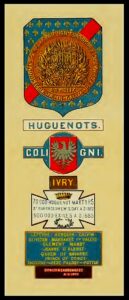 The year of Nash’s birth is not certain but is believed to be 1768. His great grandparents, Pierre and Judith Vril Le Grand, were Huguenots who settled in the Richmond area of colonial Virginia after fleeing France following the revocation of the Edict of Nantes. Nash’s parents, Peter and his second wife Lucy, resided in Prince Edward County on a farm within a few miles of Hampden-Sydney College. His father was a burgess for Prince Edward County who served in five assemblies between 1761 and 1775. His mother grew up in an affluent household and was an exemplary Christian, however her walk in grace was challenged by difficulties most of which were caused by her husband’s irresponsibility and uncontrolled temper.
Nash was relieved from his difficult home situation when his uncle, Col. John Nash, gave him a new home. He found in this new family a stable situation requiring little concern for having his physical needs met because of his uncle’s wealth. Uncle John directed Nash in his studies and made sure that he had the best opportunities for a good education. He was a handsome youth who was polite and agreeable with others, when he chose to be so, but he could also be contrary, aloof, conniving, and stern. With dark brown hair, a high forehead, expressive eyes, and a pleasing voice, he was a popular conversationalist with those he deemed acceptable company. He also had some besetting bad habits such as the prolific use of profanity and he was adept at foolishness and pulling pranks.
Le Grand attended nearby Hampden-Sydney College where in the spring of 1787 a revival took place on campus and in the surrounding community. The last thing Nash Le Grand wanted was to turn from his thoughtless and self indulgent ways, so he distanced himself from campus and his campus buddies by staying home when not in class. Despite seclusion, he received word that some of his friends had been influenced by the revival services. Thoughts of his colleagues turning from sin to Christ caused him to think about his own spiritual condition. At this time, Rev. Drury Lacy spent a night at Col. Nash’s home. Given the limitations of space due to a number of visitors, Lacy ended up rooming with Nash. During the night neither Nash nor his guest could sleep so they talked about the gospel until the dialogue ended with Nash leaving the room to go to the garden where he prayed for forgiveness of his sins.
To their great surprise while these meetings were going on, one of their companions in College, a resident graduate, Nash Le Grand, made his appearance unexpectedly among them. He had hitherto been known only as one of the wildest and most dissipated students, and it was not known that he ever felt a serious impression of any kind. He had never spoken his mind to any of us; but conviction for sin had got deep hold of his heart, which gave him no rest, night or day. (Foote, Sketches of Virginia, 1st series, p. 419).
At the time, he was studying to become a physician but his conversion led him to abandon medicine so he could prepare for the ministry. Le Grand studied theology under the direction of Hampden-Sydney College’s president, John Blair Smith. Smith was one of the sons of Robert Smith, D.D., who operated a school in Pennsylvania and he would be moderator of the second meeting of the PCUSA General Assembly in 1790. John B. Smith was closely associated with the Nash family because he had married Col. Nash’s daughter Elizabeth.
At a presbytery meeting in Cumberland, October 10, 1788, Le Grand was examined for candidacy for the ministry. After relating his Christian experience and desire to become a minister, he was added to the list of candidates. At the presbytery meeting the following April, Nash was licensed to preach the gospel. His pulpit presence, zeal, charisma, pleasing voice, physical appearance, and illustrative gestures worked together to make him a particularly popular speaker. Through his Christian commitment, Le Grand’s capabilities and presence were turned from foolishness and rowdiness as a college student to preaching.
As soon as he was licensed Nash was invited by Rev. Henry Patillo to join him in a series of revivals in North Carolina. The duo began their work in Granville County, then they travelled into Orange County, on to Caswell County, and finally the series concluded among settlements distributed along the Dan River. In October 1789, Le Grand and Patillo left North Carolina to attend a meeting of the Presbytery of Hanover in Bedford County, Virginia. Word of Nash’s preaching ability was spreading because while attending presbytery several churches approached him about taking a pastoral call. Even the Synod of Virginia offered him a call to become its missionary, but instead he became a missionary for his presbytery. It was reported to the PCUSA General Assembly, 1791, that Nash Le Grand had been a missionary of the Presbytery of Hanover for over a year and he had completed a circuit of over 300 miles in the Shenandoah Valley counties of Bedford, Rockbridge, Botetourt, Montgomery, and Rockingham.
Le Grand’s next ministry was in Winchester, Virginia for a group of Presbyterians that hoped to become an organized church. Nearby were the Opequon and Cedar Creek congregations which were two of the oldest churches in Virginia. Le Grand began preaching alternately in all three churches. His style of preaching did not go over well with the Scotch-Irish Presbyterians that filled the services in Winchester. Tension developed in the Winchester congregation because an Irish clergyman, unnamed in the source, was opposing Le Grand’s style of ministry. The Winchester flock polarized between Le Grand and the Irish minister. Adding to the division was a debate common at the time regarding the use of Watts’s psalms and hymns instead of Rouse’s Psalter. Unfortunately, the situation deteriorated sufficiently that each group claimed to own the recently constructed church building with each one locking the other one out in struggles for control. Lexington Presbytery attempted to resolve the situation by having the groups share the building by allowing each group to use the building at different times, but this plan did not work out very well. The situation finally quieted down when the Irish minister left the ministry to become a lawyer. Although this left the Winchester meeting facility open for Le Grand to lead the congregation in worship, animosity between the groups was such that he believed it best to confine his work to the Opequon and Cedar Creek churches and avoid Winchester.
Within a short time work as a supply for the two churches ended when Le Grand accepted a pastoral call and transitioned to work full-time serving the Opequon and Cedar Creek churches. He was examined by the Presbytery of Hanover and ordained at its meeting in Briery Church, April 2, 1791. His dual call not only settled him in pastoral ministry but within three years he was married to a member of Cedar Creek Church named Margaret Holmes. Margaret and Nash would have two sons and three daughters. As Le Grand continued ministry, Margaret became very ill with her condition declining for several months. When their fifth child was born the stress of delivery added to her frail condition caused her death. Nash was left without his loving wife and struggling to care for their five children.
It appears that Margaret’s death devastated Le Grand. His health began to trouble him and his emotional condition plunged into deep depression. He believed that his condition made him unfit to continue pastoral ministry. It was not uncommon in the day for widows and widowers to distribute their children among friends and relatives because of their inability to provide not only physical needs but also competent parental direction, so Le Grand located families willing to care for his children. It was Le Grand’s hope that through travelling, experiencing better climates, and viewing different locations his health would improve. But after only a year, he found his condition the same and he could not in good conscience return to the pulpits in Opequon and Cedar Creek, so he resigned.
Nash Le Grand continued experiencing reoccurring physical and emotional trials. He travelled and would occasionally preach as his health and spirits were invigorated. His wandering came to an end when he married Paulina Cabell Read who was the widow of Major Edmund Read. Mrs. Read had no children of her own and her husband had left a considerable estate. The two gathered Le Grand’s children back from their scattered homes to live on the Read estate in Charlotte County. He was unable to take on a settled ministerial call, but he did travel short distances to fill vacant pulpits as he could. Out of the kindness and concern of a local pastor named Clement Read, Le Grand was taken on as his assistant to help with his three-church ministry. Unfortunately, having two ministers did not work out well because the congregations polarized, some following Read and others attracted to Le Grand. The dual ministry was ended. Le Grand agreed not to preach in the area of Read’s church unless invited to do so.
While attending to some business regarding property he owned in Winchester, Nash Le Grand became very ill and was taken in for convalescence by his first wife’s brother. His condition deteriorated and Paulina was summoned so she could be with him when he died in October 1814. His age at death was about 46 years. Despite availability of Paulina’s considerable funds for purchasing a grave marker, Nash was buried in an unmarked grave in the cemetery of the Old Stone Church in Winchester. Nash Le Grand had enjoyed periods of fruitful preaching during his few decades of ministry, but the emotional devastation caused by Margaret’s death combined with his susceptibility to cause division contributed to times of sadness and difficulty.
Barry Waugh
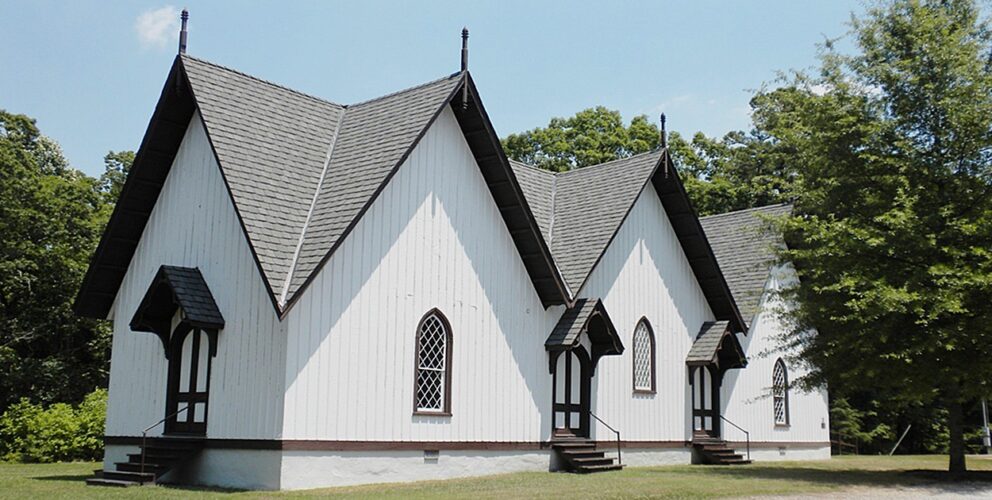
Notes–The header shows the Briery Church in rural Virginia, it is one of the churches designed by Robert L. Dabney; see, Herbert Clarence Bradshaw, “The Preacher Who Designed Four Churches,” Virginia Cavalcade 8 (Autumn 1958), 32-41. The Huguenot banner is from Nevin’s Encyclopedia of the Presbyterian Church. Drury Lacy’s grandson, Moses Drury Hoge, was the pastor of Second Presbyterian Church, Richmond, Virginia, for over 50 years. The edition of the first series of Foote’s Sketches used was published in Philadelphia by William S. Martien, 1850; he published a second series in Philadelphia by J. B. Lippencott & Co. in 1855. The main source used was published in The Presbyterian Quarterly Review, vol. 3, no. 12, 1885, pp. 601-616, which is described as having been taken “From the manuscripts of the late Rev. Dr. Hill.”