
 bwaugh
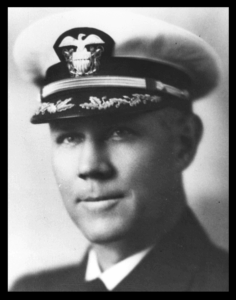 At Pearl Harbor 84 years ago on Sunday morning December 7, 1941, Capt. Thomas L. Kirkpatrick, Presbyterian, was the first chaplain of the United States military killed in World War II. Chaplain Kirkpatrick had been going about the usual Sunday duties while drinking coffee and chatting with the men in anticipation of the morning service he would lead. However, Kirkpatrick along with hundreds of others were gone, in an instant, when a Japanese 800 kilogram bomb hit the U.S.S. Arizona magazine yielding an explosion that heaved the deck before it broke apart into shrapnel, conflagration, and billowing smoke. As is often said of such catastrophes, the men never knew what hit them. Another chaplain, Lt. Aloysius H. Schmitt, Roman Catholic, served aboard the U.S.S. Oklahoma which was hit by several torpedoes damaging the hull enough that water quickly filled the ship causing it to capsize. Men trapped by the gushing flow of water were seeking a way out when Father Schmitt gave a helping hand at the cost of his own life and became the second chaplain to die in the war. Father Schmitt’s body was recovered later and buried, but any remains of Thomas Kirkpatrick are in the Arizona’s wreckage. Both of these men have been honored with medals and a plaque has been included for them at the U.S.S. Arizona Memorial Visitors Center at Pearl Harbor.
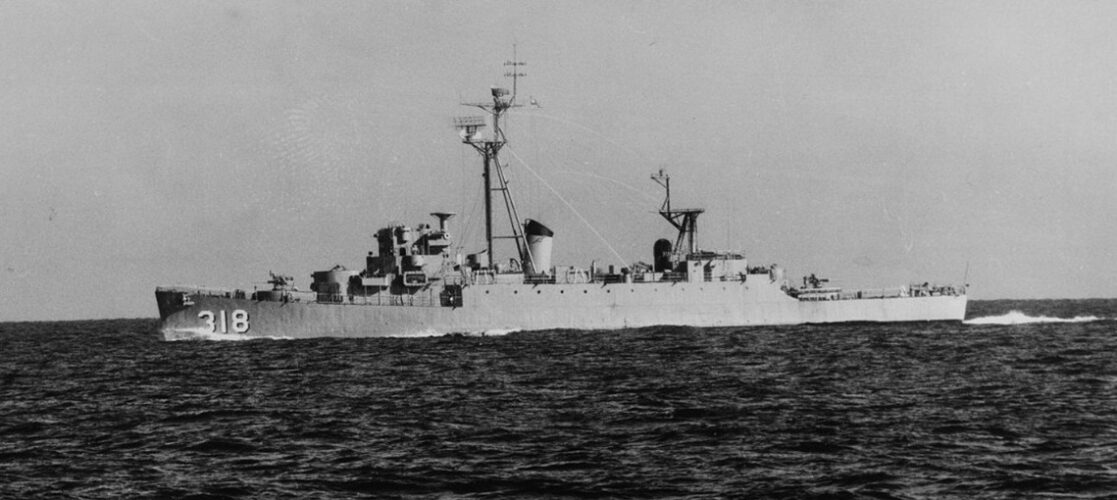
Through the efforts of Kirkpatrick’s widow, Genevieve, the destroyer escort U.S.S. Kirkpatrick was named to honor her husband. It was launched June 5, 1943 at Orange, Texas.
Thomas Leroy Kirkpatrick was born in Cozad, Nebraska, July 5, 1887. When he completed high school studies he entered Colorado College where he graduated with the Bachelor of Arts in 1911. According to Colorado College publications he was an active student involved in several organizations, societies, and a fraternity, ATΔ. During the fall of 1910 he participated in a missionary conference held at the college that included speakers Arthur Rugh and Charles Ewald. Mr. Rugh was one of the leaders of the Young Men’s Christian Association (YMCA) work on foreign fields. Ewald, also with the YMCA, directed student work in South America organizing associations in the major schools of the continent. That same fall the influence of the YMCA at Colorado College increased when it began offering missionary classes in the curriculum. Kirkpatrick was active in the college YMCA and held several offices during his four years. He taught a class titled, “Japan of Today,” in the YMCA program which provided a special study of the nation and the activities of the YMCA among the Japanese. Little did he know at the time that it would be a Japanese bomb that would end his life. Thomas must have been a popular man on campus because when his fraternity published its brief bit in the list of house pitches in Pikes Peak Nugget, 1910, his house said of itself,
ALPHA TAU DELTA—We have the only chapter of all-round fraternity men in college. We are after all the good looking men and of course we make mistakes—but we are willing to take chances if you are. Kirkpatrick, the secretary of the YMCA, is a member of our chapter.
The participation of young Kirkpatrick provided a stamp of approval.
Included among his other college activities was assistant editor of the college newspaper, president of the Student Volunteer Bank, Student Commission-Manager of Debating, membership in the glee club, and representative to the Pan Hellenic Council. The three or four years between his Colorado College graduation in 1911 and completion of his divinity program at McCormick Theological Seminary in Chicago in 1918 are unaccounted for in the sources, but it may be he pursued his interest in Persia missions and it did not work out, or his interest in the YMCA may have involved him in its interdenominational work. Regardless, he was ordained February 6, 1918, by the Presbytery of Chicago, Presbyterian Church in the United States of America (PCUSA) and he would very soon be ministering in the military.
Appointed a Chaplain February 12, 1918, in the midst of the United States involvement in The Great War (World War I), his first post was at the Navy Yard, Washington, until he went “over there” to France where he served in the Naval Air Station in Pauillac, France, until he was transferred September 1918 to the Radio Station, Croix d’Hins, France. The Great War ended November 11, but Kirkpatrick continued with the station until he was transferred to Lille to work with Navy Relief until May 1919. It had taken a considerable number of months for the initially ill-prepared American Expeditionary Force to build up its presence in Europe when war was declared by President Wilson in April 1917, once the war ended, stabilizing the region and sending the troops back home took some time.
Chaplain Kirkpatrick’s post-war duty began on the U.S.S. North Dakota and continued until the day before his birthday in 1921. His peace-time assignment included a promotion when he was commissioned lieutenant, November 1, 1920. Following a two-year service on the U.S.S. Utah, he married Genevieve Burnet in the fall of 1923. He was then reassigned to the Bureau of Navigation during which service he was again promoted, this time to lieutenant commander on November 2, 1924. Beginning in September 1925, he became Fleet Chaplain Kirkpatrick on the U.S.S. Huron until he was transferred to the U.S.S. Pittsburgh to serve until August 1927. It is uncertain how it fits in his sequence of service but it is mentioned at the end of his record that he participated in the Yangtze Campaign, 1926-1927, which involved United States Navy gunboats on the Yangtze River during a period of instability and danger for foreigners visiting China. Readers may remember Richard McKenna’s novel about the Yangtze Campaign, The Sand Pebbles, which was made into a movie starring Steve McQueen. His next post continued three years in the Naval Training School, San Diego, beginning October 1927. Then, after two years on the U.S.S. Saratoga ending May 1932, he was reassigned to the Navy Yard, New York, for three years. His next post moved him half-way around the world to Samoa for a two-year stint. In March 1937 he returned to San Diego for duty at the Marine Barracks until his final assignment on the Arizona began September 13, 1937. At the time of his death he had recently been promoted to the rank of captain.
Thomas and Genevieve Kirkpatrick had one child, a son named Thomas. He has published a book about his parents titled, The Love that Endures: Remembering My Mother and My Father, U. S. S. Arizona’s Chaplain at Pearl Harbor, 2011. Surely, many of the gaps and missing information in this Presbyterians of the Past biography such as the names of Chaplain Kirkpatrick’s parents and early life information could be found in this book.
Chaplain Kirkpatrick’s clock was recovered from the Arizona wreckage and and can be viewed in the museum of the Arizona Memorial at Pearl Harbor–it is stopped at 8:04:35.
Barry Waugh
For a biography of a First World War chaplain read “Chaplain T. M. Bulla, 1881-1918” on this site. Also on this site is a five part series about J. Gresham Machen’s work with the YMCA in France during the First World War. The first part is “J. Gresham Machen, France 1918.” There are links at the end of each part to the next one.
Notes—The header showing the U.S.S. Kirkpatrick Destroyer Escort 318, and the portrait of Chaplain Kirkpatrick are both from the Naval History and Heritage Command website. The service record information was located in United States Navy Chaplains, 1778-1945, vol. 3, by C. M. Drury, 1948. The Colorado College publications were located on Internet Archive. The website for the U.S.S. Arizona Memorial in Pearl Harbor is on the National Parks Service site.