

 bwaugh
 William Swan was born July 26, 1802 to William and Catherine (McAlester) Plumer in what is currently Darlington, Pennsylvania. He was the youngest of nine children. Before attending college at the age of nineteen, he walked nearly three-hundred miles south to Lewisburg, Virginia (West Virginia), to study with John McElhenney in the academy he mastered in conjunction with his pastoral call to the Old Stone Church. William was a dedicated student who proved capable with the ancient languages, and he and Master McElhenney became good friends. The other students called him Daddy because he was a bit older. Ready for further work, Plumer went seventy miles east from Lewisburg across the Allegheny Mountains to study at Washington College in the Shenandoah Valley. Following graduation in 1825 he headed to Princeton Seminary in New Jersey where he studied about fifteen months but did not graduate. New Brunswick Presbytery licensed him to preach in 1826, then he was ordained by Orange Presbytery in 1827. William married a widow born in Charleston, South Carolina named Eliza (Garden) Hassell on June 11, 1829.
Several churches were served by Plumer’s more than fifty years of ministry. For three years he was home missionary and stated supply for Orange Presbytery during which time he organized churches at Danville and Warrenton, Virginia. These rural congregations grew so quickly that both were able to build churches while he was their supply. Continuing in Virginia, he supplied the Briery Church, 1829-1830, before he was installed pastor of the Tabb Street Church in Petersburg where he continued three years ending in 1834. His most extended calls were to First Presbyterian Church in Richmond 1834-1846, then moving to Maryland he served the Franklin Street Church in Baltimore, 1847-1854. Moving back to his Pennsylvania homeland from 1854 to 1862 he was the minister of Central Presbyterian Church in Allegheny while also professor of theology at Western Theological Seminary. One of his colleagues at Western was Professor of Oriental and Biblical Literature Melancthon W. Jacobus. Moving to Philadelphia he was stated supply for the Arch Street Church, 1862-1865, before accepting a call to pastor Second Presbyterian Church, Pottsville that ended in 1867.
Dr. Plumer spent his later years teaching at Columbia Theological Seminary, South Carolina, where he was initially the Professor of Didactic and Polemic Theology, 1867-1875, but later at his own request he became Professor of Pastoral, Casuistic, and Historical Theology until he resigned in 1880. Professor Plumer’s abilities were acknowledged by honorary degrees including three D.D.s given in 1838 from Princeton, Lafayette, and Washington, as well as the L.L.D. from the University of Mississippi in 1857. He has the unique position of being the only presbyter to serve as a general assembly moderator in both the Antebellum Old School P.C.U.S.A. in 1838, and then also in the post-war continuation of the Old School in the South as the P.C.U.S. in 1871. Plumer would have found the Old School assembly in 1838 particularly challenging due to bitter feelings among many concerning the division into Old and New Schools in 1837.
William S. Plumer, D.D., LL.D. died in Baltimore, October 22, 1880. His body was transported by train to Richmond for burial in Hollywood Cemetery. The service was held in First Church where Plumer had been pastor with the memorial discourses delivered by Thomas L. Preston, pastor of First Church, and Moses D. Hoge, pastor of Second Church. Hoge was especially grateful that Plumer convinced him upon graduation from Union Seminary to remain in Richmond. Plumer’s grave is marked by a tall obelisk given to honor him by his “grateful students.” Eliza had predeceased him October 30, 1878. Written on her grave marker next to his is,
Endowed with mature judgment, great prudence and earnest love, her price was indeed far above rubies, and the heart of her husband did safely trust in her. Her children also rise up and call her blessed.
He was survived by two daughters and a grandson, William Swan Plumer Bryan, who was a minister in the P.C.U.S. in West Virginia at the time of his grandfathers death.
Publications by William Plumer include commentaries on Romans, Hebrews, and Psalms, numerous tracts, and articles for both newspapers and journals. Several of his shorter works were published anonymously, so his total literary output cannot be accurately determined. From 1837-1845, Plumer was the editor of The Watchman of the South, which he founded during his ministry at First Church, Richmond. His concern for the poor and disabled led him to spearhead the founding of The Institution for the Blind, Deaf, & Dumb in Staunton, Virginia.
Dr. Plumer had a particular interest in publishing material on biblical and theological subjects written for the average members of the churches, new Christians, and children. An example of one of these titles for the laity is Truths for the People: Or, Several Points in Theology Plainly Stated for Beginners, which was published by the American Tract Society in 1875. The title clearly shows his purpose was to bring the fundamentals of doctrine to Beginners or new Christians, whether young or old. Plumer did not assume that his readers had even basic knowledge of Christian terminology. For example, the first chapter of Beginners is titled “Theology” and it opens with a simple definition of the word.
The word THEOLOGY means a discourse concerning God. It [the word theology] is not found in the Scriptures. We have there “the word of God,” “good doctrine,” “sound doctrine,” “form of doctrine,” “doctrine of God,” “doctrine of Christ,” “form of sound words,” “the Scriptures,” and such like phrases. Theology is divinity, as a theologian is a divine. Theology treats of the being and perfections of God, of his relations to us, his purposes towards us, his promises made to us, his will concerning us, and the right way of pleasing him (p 7).
Every page of the book has quotations from Scripture, some of which have their references provided but others do not. The language of the Westminster Standards is echoed in the text, but there are no citations of the catechisms or the confession (maybe due to the book being published by the interdenominational American Tract Society). As the book continues it covers subjects including: the attributes of God, the Trinity, man the sinner, Christ the mediator, justification, death, hell, and heaven. The book has thirty-three chapters, and the topics of the chapters somewhat coincide with those of the thirty-three chapters of the Westminster Confession of Faith.
If there is only one lesson to be learned from the life and ministry of W. S. Plumer, it is from his marriage of sound doctrine with simple brevity of expression for those who want to know the basics of Christian living. This does not mean he was superficial or simplistic but instead capable of teaching weighty matters so a child could understand his lessons. Sometimes the education required for a candidate to be ordained a Reformed minister produces a preacher whose sermons are more like lectures than expositions that apply God’s Word to God’s people. It could be said that as the design, complexity, and mechanism of an old pocket watch are interesting, so are the intricacies and unplumbable depths of the Word of God, but in the end what is most beneficial about the pocket watch is that it provides the correct time just as the Word of God provides direction for obedience and service when its doctrine is applied through faithful preaching.
Barry Waugh
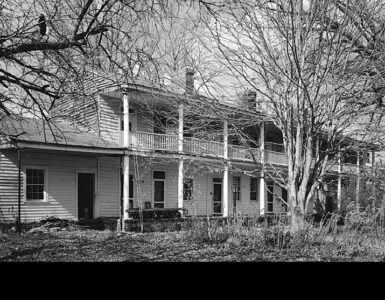
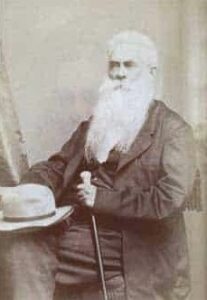
Notes-Many of Dr. Plumer’s numerous works are available for download on the Log College Press website. The header picture was taken by the author and shows the main building of Columbia Theological Seminary which was located at this site from 1831 until the seminary moved to Decatur, Georgia in 1927. The building is currently a house musem called the Robert Mills House. The house was designed by Mills (designer of the Washington Monument) for Ainsley Hall who unfortunately died before he could move in. Both Ainsley Hall and Robert Mills were members of First Presbyterian Church in Columbia. Information about Plumer’s early life was found in Henry A. White, Southern Presbyterian Leaders 1683-1911, Carlisle: Banner of Truth, 2000; see the entry for Plumer on pages 286-292. But it seems sources have relied heavily on his nicely done memorial in the Necrological Reports and Proceedings of the Alumni Association, Princeton Theological Seminary, Philadelphia, 1881. Plumer’s birthplace was originally named Greersburg, but the name was changed in the early nineteenth century to avoid confusion with nearby Greensburg. The portrait of Plumer was supplied by Director Wayne Sparkman of the PCA Historical Center. Also accessed for this biography were Nevin’s Encyclopaedia of the Presbyterian Church in the United States of America, 1884; Scott’s Ministerial Directory of the Presbyterian Church, U.S., 1942; the General Cataloge of Princeton Theological Seminary: 1815-1881; and Historical and Biographical Ccatalogue of the Officers and Students of the Western Theological Seminary of the Presbyterian Church, at Allegheny City, Pennsylvania, 1827-1885.