
 bwaugh
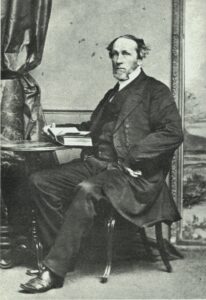 William A. Scott describes the sermon text following this introduction as one in a series of “expository dissertations” originally delivered in 42nd Street Presbyterian Church which was located between 7th and 8th Avenues in New York. He served the New York church between two ministries in California, 1854-1861, and 1870 until his death in 1885. To learn more about Scott, read the biography on this site, “William A. Scott, Missionary to California.” He was not only the minister of a church in California but during his second tenure in the state he was the founding professor of San Francisco Theological Seminary in 1871. The source used for the sermon is The Christ of the Apostles’ Creed: The Voice of the Church Against Arianism, Strauss, and Renan, with an Appendix, New York: Anson D. F. Randolph, 1867, pages 224-48. Some of the books Scott used when preparing the lessons include: Herman Witsius, Sacred Dissertations on What is Commonly Called the Apostles’ Creed, 2 vols, Latin then English; E. Harold Browne, An Exposition of the Thirty-Nine Articles Historical and Doctrinal; John Pearson, An Exposition of the Creed, several editions, seventeenth century; A. P. Forbes, A Short Explanation of the Nicene Creed, for the Use of Persons Beginning the Study of Theology; and W. W. Harvey, History and Theology of the Three Creeds, 2 vols, 1854.
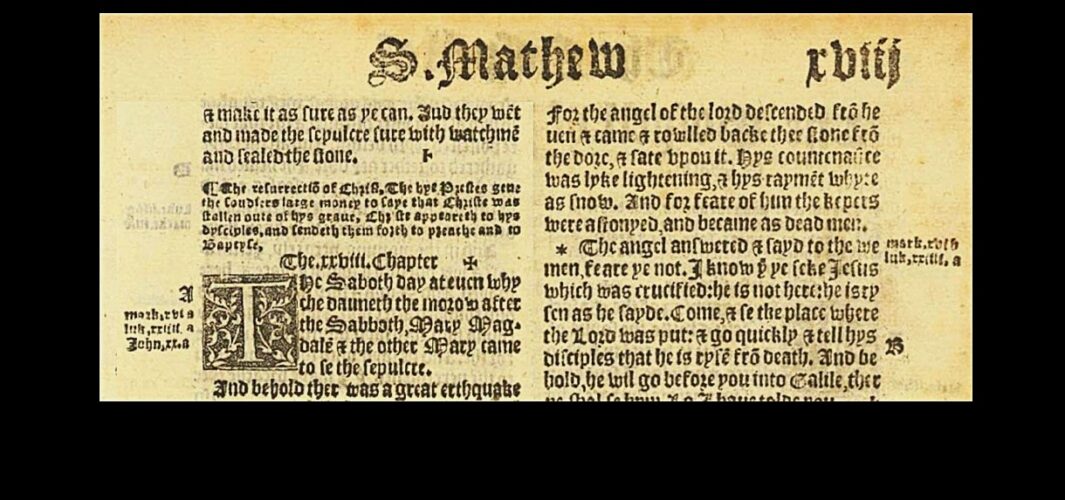
The header shows the beginning of Matthew 28 in Matthew’s Bible which was published late in 1537. The image has been pasted up with the bottom of the left column moved up from its proper location on the page. William Tyndale was executed by Henry VIII in 1536 leaving his Bible incomplete. However, the king later gave permission for the Bible to be published in English resulting in Tyndale’s New Testament and the portion of the Old Testament he had completed was finished by Myles Coverdale as edited by John Rogers. It was completed quickly and issued in 1537 and came to be known as Matthew’s Bible because Rogers had used the pseudonym, Thomas Matthew. Bible translators did not use their real names because it could cost them their lives as was the case with Tyndale. With the whims of Henry VIII and the questionable situation after his death in the future, it was a good idea to maintain anonymity as a translator. See a copy of the Bible HERE.
Barry Waugh
CHRIST ROSE THE THIRD DAY.
William A. Scott
That like as Christ was raised up from the dead is the glory of the Father, even so we also should walk in newness of life.—Romans 6:4.
Say not in thine heart, Who shall ascend into Heaven? (that is, to bring Christ down from above) Or, “Who shall descend into the deep? (that is, to bring up Christ again from the dead). But what saith it? The word is nigh thee, even in thy mouth, and in thy heart: that is, the word of faith which we preach; that if thou shalt confess with thy mouth the Lord Jesus, and shalt believe in thine heart that God hath raised him from the dead, thou shalt be saved. For with the heart man believeth unto righteousness; and with the mouth confession is made unto salvation”—Romans 1:6-10.
For I delivered unto you first of all that which I also received, how that Christ died for our sins according to the Scriptures; and that he was buried, and that he rose again the third day according to the Scriptures, &c.—1 Corinthians 15:3, 4.
***************************
So prominent is the fact of our Lord’ s resurrection in the preaching of the apostles on the day of Pentecost and ever afterwards, as well as in some of their Epistles, that the truth of all we are taught in the New Testament concerning Christ depends on the fact of his resurrection. It is necessary for proof of the Divinity of his person, the genuineness of his mission, the efficacy of his atonement, and the eternal life of his people. When Philip preached Jesus from the book of Isaiah to the Ethiopian, he told him that the condition on which he might be baptized and saved was: “If thou believest with all thine heart.” And the Ethiopian answered: “I believe that Jesus Christ is the Son of God.” That is, he believed all that Philip had preached to him concerning the life, Messiahship, death, resurrection, and ascension of Jesus. That is, he preached as Paul preached, saying, “If thou shalt confess with thy mouth the Lord Jesus, and believe in thine heart that God hath raised him from the dead, thou shalt be saved.” And so also Paul, in his discourse in the synagogue at Antioch (Acts 13.), boldly declares that the voices of the Prophets read every Sabbath were fulfilled in the things which the Jewish rulers and people, with the Gentiles, did unto Jesus, and that Moses, David, and all their sacred writers had foretold the sufferings and death of the Messiah, just such sufferings, and just such a death and burial and resurrection as the admitted facts of the day declared to have been accomplished by Jesus of Nazareth, and that, therefore, He was the true Messiah of God. Nothing can excel the point and power of the Apostle’s argument in this case. It is precisely the argument used by Peter on the day of Pentecost.
And it may be well here to observe that whatever disputes have been carried out about the other Articles of our Creed by the Fathers and the Schoolmen, and by the theologians of the Reformation, they have almost universally agreed about this one. Among them all, it has been recognized as the cornerstone of the Church of God, without which it would fall to the ground, “the pillar of Christianity itself.” Its nature, and the consequences inevitably flowing from it, if true, are of such importance that it is an essential, fundamental Article of our holy faith. The Apostle, in 1 Corinthians 15, shows conclusively that if Christ did not rise again the third day from the dead, according to the Scriptures, then we have no Church, no Gospel, and Christianity itself is nothing.
And our preaching is vain, and your faith is also vain. Yea, and we are found false witnesses of God; because we have testified of God that He raised up Christ; whom He raised not up, if so be that the dead rise not. For if the dead rise not, then is not Christ raised; and if Christ be not raised, your faith is vain; ye are yet in your sins. But now is Christ risen from the dead, and become the first fruits of them that slept. For since by man came death, by man came also the resurrection of the dead.
In the light of so many clear passages of Holy Scripture that assert, imply, or allude to the resurrection of Jesus, it is astonishing that any one claiming to be a Christian should deny it, or have any cavils about this Article of our Creed; yet, according to the public journals, an assembly or synod of Protestant divines and laymen in Europe have passed solemn resolutions by a large majority vote, within the last few months, to the effect that we have no satisfactory and consistent account of the resurrection of the Lord Jesus.[i] In fact, the direct and inevitable tendency of all those theological speculations that throw doubts on the inspired authority of God’s Word, and do not recognize the death of Christ as an atonement or vicarious sacrifice for sin, and do not receive the doctrine of justification by faith and salvation by free grace, is to ignore or set aside the doctrine of Christ’s resurrection. It is of great importance, therefore, to find an Article of our holy faith setting forth so clearly and firmly the fact that in all ages, from the time of the crucifixion and resurrection of Jesus, it has been most surely believed that “the third day He rose again from the dead.” Such testimony from the voice of the holy apostolic universal Church is a safeguard for those who love the truth as it is in Jesus. According to the Scriptures, the Church on earth is God’s witness to testify concerning the Lord Jesus, His Holy Anointed One, and is especially set forth in the world to bear witness of His resurrection from the dead. Thus, in choosing Matthias to replace Judas Iscariot, it is said: “Wherefore of these men, which have companied with us all the time that the Lord Jesus went in and out among us, must one be ordained to be a witness with us of his resurrection.” And accordingly, God did pre-determine witnesses for this purpose—such persons as were best fitted to give the proper testimony—persons well qualified to know and state the truth, and sufficient in number to establish a fact by law. They were so well acquainted with our Lord’ s person before his death, and admitted to such familiar intercourse with him after his resurrection, that it is impossible for them to have been themselves deceived. Nor are we able to discover any possible motive they could have had to deceive others. And besides the many separate, distinct appearances of our Lord to different parties, at different times and under different circumstances, and for the space of forty days, we have the testimony of above five hundred eye-witnesses that He did appear alive in his human body after his resurrection, and gave them such tokens and signs of the identity of the body in which He appeared to them with the body in which He was crucified, that they did firmly believe in the reality of his resurrection; and He the more convinced them of this by continuing with them and speaking to them many things concerning the kingdom of God. And as we do not see how it was possible for so many eye-witnesses to be deceived, or to desire to deceive others, so we are not able to conceive how it was possible for them to have succeeded in deceiving themselves or the world in such a fact as this, if they had been wicked and reckless enough to have tried to do so.
In the two Discourses already delivered on the fifth Article of our Creed, it was my object to show in what sense our Lord descended into hell, and that whatever Gehenna or Purgatory may or may not be, our Creed knows nothing of them. As I am now travelling on the line of the Apostles’ Creed, I do not wish to be turned aside to other discussions, however important they may be. The other clause of the fifth Article is: The third day He rose again from the dead. This is a distinct, positive proposition, and I propose, with God’s assistance, the following method: namely,
FIRST. A brief history of the Article, and some exposition of its main particulars. And the
SECOND discourse, for next Sabbath evening, if the Lord be pleased to grant us his blessing, will be a brief historical demonstration of the truth of our Lord’s resurrection.
I. HISTORICALLY, we find this Article in all the ancient creeds just as it stands in the Apostles’ Creed, coming after our Lord’ s burial or descent into hell, and followed by his ascension, sitting at the right hand of the Father Almighty and coming to judge. There are no essential variations in its wording—no variations at all except as to some small matters of mere taste as to the use or omission of “again,” or “from the dead,” some considering these words as implied in He rose, and not necessary to the meaning. This Article was inserted in the symbols of the Church’s faith in ancient times, and preserved with fidelity just as we have it; first, because it is stated with singular emphasis by the Apostles; and secondly, because it was a proper denial of many foolish and wicked conceits that were taught by false teachers even in Apostolic times. For we learn from Paul to Timothy that there were false teachers in his day who said, “the resurrection was already past.” 2 Timothy 2:18. And from 1 Corinthians 15:12, that there were some who said, “there is no resurrection of the dead.” The Sadducees, who denied a future state, and denied all resurrection, of course, did not admit the resurrection of Christ. The Essenes, who seem to have been quite a large sect in the first centuries of our era, believed in the immortality of the soul, but denied the resurrection of the body. Then, of course, Simon Magus, the Docetist, and all the errorists of those days who denied the real and proper humanity of our Lord Jesus, denied also the reality of his resurrection and ascension. Augustine tells us, that the Cerinthians held that Jesus, whom they took to be a mere man, had not risen, but was yet to rise. Apelles, a disciple of Marcion, held that when Christ came from heaven, He formed for himself as He descended an airy and sidereal flesh, but when He arose and ascended into heaven, He restored this body to its pristine elements, which being thus dispersed, His spirit alone returned to heaven.[ii]
It does not seem to me necessary, or for our edification, to have at present any further details concerning the fables and conceits of many men who have tried to be wise above what is written in the Word of God for our instruction concerning the resurrection of Christ. Quite enough has been said to show that the strong language of the Article in the Church of England, in our Confession of Faith and Catechism, as well as the Catechism of Heidelberg, is justified, and was no doubt designed to oppose the exaggerated opinions that were advanced on the one hand by those who taught that our Lord’s body after his ascension had ceased to be human, by being transubstantiated into his Divinity; and to oppose also, on the other hand, the absurd views entertained by all those who denied the verity of his essential humanity.
The words of our standards on this point are: “On the third day He arose from the dead, with the same body in which he suffered; with which also He ascended into heaven, and there sitteth at the right hand of the Father, making intercession.”—Confession of Faith, Chap. 8. sec. 4. And the Fourth Article, Church of England, says, “Christ did truly rise again from death, and took again his body, with flesh, bones, and all things appertaining to the perfection of a Man’s nature, wherewith He ascended into heaven, and there sitteth until He return to judge all men at the last day.” The same doctrines are taught in the symbols or formularies of the faith of the Christian world, but perhaps nowhere is set forth with more clearness and emphasis than in questions 51 and 52 of the Larger Catechism, with their answers, which are as follows:
51. Question–What was the estate of Christ’s exaltation?
Answer–The estate of Christ’ s exaltation comprehendeth his resurrection, ascension, sitting at the right hand of the Father, and his coming again to judge the world.
52. Question–How was Christ exalted in his resurrection?
Answer–Christ was exalted in his resurrection, in that, not having seen corruption in death (of which it was not possible for him to be held), and having the very same body in which he suffered, with the essential properties thereof (but without mortality and other common infirmities belonging to this life), really united to his soul, he rose again from the dead the third day by his own power; whereby he declared himself to be the Son of God, to have satisfied divine justice, to have vanquished death and him that had the power of it, and to be Lord of the quick and the dead. All which he did as a public person, the Head of His Church, for their justification, quickening in grace, support against enemies, and to assure them of their resurrection from the dead on the last day.
In the proposition of the Creed: THE THIRD DAY HE ROSE AGAIN FROM THE DEAD, there are three particulars to be noticed:
I. The simple statement of the fact itself, “He rose again.”
II. “He rose again from the dead.” And,
III. “He rose again from the dead the third day.”
The thing affirmed is the resurrection of Christ, the action itself, is He rose again. This part of our subject may be dealt with in this way, namely, First, show from the Hebrew Scriptures that the ancient Jewish Church believed that the Messiah was to rise from the dead; and Secondly, show from the New Testament that Jesus of Nazareth did rise from the dead just as it was promised and foretold the Messiah would do; and, therefore, we believe this Article is true, and that Jesus is the true and only Messiah. This is the line of argument offered by Bishop Pearson.
I. It is directly and repeatedly declared by the Apostles, as well as by our Saviour himself, that his sufferings and resurrection were according to the Scriptures. Paul asserts, in one of the places cited in the beginning of this Discourse, that he constantly preached that Jesus rose again from the dead the third day, according to the Scriptures. And our Lord himself, in his discourse with the two disciples on the road to Emmaus, after they had recited to him the things which had just come to pass in Jerusalem; namely, that Jesus of Nazareth, a Prophet mighty in deed and word before God and all the people, had been delivered by the chief priests and rulers to be condemned to death, and that He had actually been crucified, and besides all this, today, they said, is the third day since these things were done. Yea, and certain women also of our company made us astonished which were early at the sepulcher; and when they found not his body, they came, saying, that they had also seen a vision of angels, who said that He was alive. And certain of them which were with us went to the sepulcher, and found it even so as the women had said; but Him they saw not. Then said Jesus unto them, O fools and slow of heart to believe all that the prophets have spoken—Ought not Christ (who is the Messiah) to have suffered these things, and to enter into his glory? And beginning with Moses and all the Prophets, he expounded unto them in all the Scriptures the things concerning himself. And afterwards, late in the evening, after long communing with them, when, as they say themselves, their hearts were burning within them, unconsciously testifying of Jesus while He talked with them, and while He opened to them the Scriptures—for all this time “their eyes were holden that they should not know him”—but when it was towards evening, “he opened their eyes and they knew him, and he vanished out of their sight. And they rose up at the same hour and returned to Jerusalem, and found the eleven gathered together, and them that were with them saying, the Lord is risen indeed and hath appeared to Simon.”
Observe here, 1. That the Jews then had and acknowledged as their Holy Scriptures the very same books that we have, and spoke of them as consisting of the same divisions that we recognize. Our Saviour speaks of “Moses and all the Prophets, and expounded, unto them in all the Scriptures.” And in the verses following, when He appeared to the disciples and did eat a piece of broiled fish and honeycomb. He said unto them, These are the words which I spoke unto you while I was yet with you, that all things must be fulfilled which were written in the law of Moses, and in the Prophets, and in the Psalms, concerning me.
2. It was then admitted by the Jewish Church that their Scriptures promised and spoke of a Messiah to come. When these two disciples had recited the facts of the sufferings, death, and resurrection of Jesus of Nazareth, our Lord immediately replied that these were the very things their own prophets had spoken concerning the Messiah. Ought not Christ—which you know is the Greek for Messiah—ought not this Jesus of Nazareth, who claimed to be the Messiah, and who was as you believe the Messiah—who should have redeemed Israel; I say, if Jesus of whom you speak was indeed the Redeemer of Israel, as you once hoped he was, ought He not, according to your Prophets, have suffered precisely these things and to enter into His glory? And then to prove this, “beginning at Moses and all the Prophets, He expounded unto them in all the Scriptures the things concerning himself.” And,
3. On the very same point, and at the same time, as a proof also that Jesus had foretold his sufferings and resurrection to his disciples, observe what He says to them when He appeared to them after his resurrection, when they were so terrified and frightened, and supposed that they had seen a spirit that in order to calm their troubled hearts He gave them the strongest assurance that it was He himself, their own real and true Lord and Master, He said: “Behold my hands and my feet, that it is I myself. Handle me and see; for a spirit hath not flesh and bones as ye see me have. And when He had thus spoken, He shewed them His hands and His feet. And then they gave Him a piece of a broiled fish and of a honeycomb, and He took it and did eat before them. He said unto them, “These are the words which I spake unto you, while I was yet with you, that all things must he fulfilled, which were written in the law (that is, in the five books of Moses), and in the Prophets, and in the Psalms, concerning me.” These are the words, said Jesus, that is, the things that have come to pass in these days here in Jerusalem, and about which you are so much concerned, and which are just the things I was in the habit of talking to you about. I taught them to you out of your own Scriptures. They are the things concerning me which you should believe. And “then opened He their understanding, that they might understand the Scriptures. And He said unto them, Thus it is written, and thus it behooved Christ to suffer, and to rise from the dead the third day: and that repentance and remission of sins should be preached in his name among all nations, beginning at Jerusalem. And ye are witnesses of these things.” Luke 24.
So clearly do the Hebrew Scriptures speak of a suffering Messiah as well as of a glorious, conquering, reigning, and exalted Messiah, that modern Jewish doctors have held that there were to be two Messiahs: one to fulfil the prophecies concerning the suffering Messiah, whose earthly sorrows were to end in a bloody death; and the other to fulfil the predictions concerning a Messiah who was to conquer and reign as the Son of David, and restore their nation to the golden age and land of their fathers.[iii] It is not necessary to spend a breath in proving that the Scriptures know nothing of two Messiahs. There is but one Mediator between God and men. Nor can it require an illustration in such a presence as this, that both classes of the Hebrew texts concerning the Messiah who was to come—both those that foretell his sufferings and the glory that should follow, as Moses and Elias did on the mount of transfiguration, are fulfilled in Jesus of Nazareth. The things foretold to happen to the Messiah are the very things which did happen to Jesus of Nazareth. The predictions of a suffering Messiah were fulfilled in his state of humiliation, and the predictions of a conquering, exalted, and reigning Messiah are fulfilled in his state of exaltation. “For Him hath God exalted with his right hand to be a Prince and a Saviour.” But I have not time, nor do I think it necessary, to enter further upon some details to prove that the Jewish Church believed in a Messiah who was to rise from the dead. For all those places in the Psalms and in the Prophets that speak of his sufferings and death, and then of his glory, and of his kingdom, involve the necessity of his resurrection from the dead. According also to the types, as well as to fulfil the prophetic oracles, the Messiah promised to the Jewish Church would rise from the dead. And now, secondly, that Jesus of Nazareth did rise from the dead the third day, as our Article affirms, and just as it was promised in the Old Testament Scriptures the Messiah should do. I have need only to point you to the history of the event itself in the Gospels, and the repeated declarations and allusions to it by the Apostles in their discourses and Epistles. But just here I only wish to say on this point, that if the proofs of the resurrection of Jesus Christ are not sufficient to establish its truth, then no matter of fact on earth can be established by testimony. As a “sturdy” old author says—to refuse the proof we have of the resurrection of Jesus, “is in effect to decline all proof by testimony, to renounce all certainty in human affairs, to remove all grounds of proceeding securely in any business or administration of justice, to impeach all history of fabulousness, to charge all mankind with insufficiency of perception, or extreme infidelity, and to thrust God away from bearing credible attestation in any case.”[iv]
II. The second particular which I am to notice is that “HE ROSE AGAIN FROM THE DEAD.” The subject of this affirmation, He, is Jesus Christ, who “suffered under Pontius Pilate, was crucified, dead and buried. He descended into hell. The third day he rose again from the dead.” And still more, it is of his human nature this affirmation is made. As to his Divinity, no accession of glory is predicable. God is the highest, and cannot ascend. He is always the ever blessed and unchangeable in all His perfections. The words, “He rose again from the dead,” imply, (1.) That He was really dead. This has been proved beyond the possibility of doubt. His friends, his enemies, the Roman guard, Pilate and the centurion, have all given their testimony that his death was real. The piercing of his side by the soldier’s spear itself was enough to make sure of his death. (2.) He was also actually buried—laid in the new tomb of Joseph of Arimathea, in a garden. Although He was soon to rise again, yet He was honored with a solemn funeral, and His burial was according to the Scriptures, and the marks of honor bestowed upon Him at His funeral completed the evidences that in His state of humiliation he met all the requirements of the promised Messiah. He was not carried from his own house to his tomb, but from a Roman cross, by a small but honorable and select procession, who were unable because of the shortness of time to prepare His body as they would have liked for His burial. It was not the burial of an earthly conqueror, but of the Prince of Life, who even then held in his hands the keys of death and hell. The rent veil, the opened graves, and the earthquake after the darkened sun, attested that it was God’s own Son that was laid in the tomb. His body was not enclosed in a coffin of wood or iron, as with us, but was laid in a recess or niche—on a kind of shelf somewhat like a vault in our house of reception for dead bodies, except that it was the side and not the head that was toward the open court. Nor was there any wall, door, or slab to fill the mouth of the vault or recess where the body was laid.
To fully understand the passages of the Gospel narratives of the burial and resurrection of our Lord, we must remember some minute matters concerning Jewish sepulchers. They differed in several particulars from ordinary graveyards. The sepulchers of wealthy Jews were made from caverns in rock. Sometimes a natural cave was selected and cut and changed to their taste. Others cut their tombs out of living rock—this was the way Joseph’s tomb was made. It was hewn out of rock. There was then no possible outlet for it, or way to get into it but by the door. Let this be noted. It was hewn out of the solid, living limestone rock. Ordinarily the entrance into such a sepulcher was first a descent into an open area, or kind of court, the covering of which was the living rock itself, and then, if you looked around on each side, you would see a recess some six feet or more lower than the area in which you are standing. And these recesses also had cavities or niches of their own, in which the dead bodies were laid. Of course, their sepulchers were not always precisely of the same shape or size. This is a description of an ordinary one, such as might have belonged to a man of wealth, like Joseph of Arimathea. Usually there were places in such a tomb for twelve or fifteen bodies, or more if the family was very large. There is no difficulty in our record that speaks of John and Peter having entered the sepulcher where our Lord was laid, “and, stooping down, looked into the place,” the niche below the entrance area where the body of our dear Lord had been laid. But while the rest are standing in the area, and looking down into the receptacles where the dead bodies were to be placed, Peter, true to his nature, actually descends, and goes to the very recess whence the dead body of Jesus had just risen. (See, Lightfoot and Witsius.)
Five circumstances are to be noted in the narrative. (1.) Our Lord’ s tomb was not in the family vault of Joseph the carpenter of Nazareth, but the sepulcher of Joseph of Arimathea. Our Lord was not born in a house belonging to his reputed father, nor was He buried in a tomb that was his own. He was born and lived among the poor, but had his tomb with the rich; for the Scriptures cannot be broken. He lived in other men’s houses, and his body was embalmed at the expense of his friends, and then laid to rest in. another man’s tomb. (2.) It was a tomb hewn out of rock. There were no concealed passages in the earth through which the body could have been removed. (3.) It was a new tomb—one in which no man had ever been laid. Joseph, the owner of the tomb, lived in a provincial town. His father was not buried in Jerusalem. But he, having risen to distinction, being now a member of the Sanhedrim, and residing in Jerusalem, had prepared himself a tomb. And Providence so ordered all this so no suspicion could arise about the identity of our Lord’s person when He arose from the dead, or any one be able to say that it was some other person who had risen in his place, or that he had arisen by virtue of having touched the bones of some old prophet that was buried there before him, after the example of the case spoken of in 2 Kings 13:21. (4.) It was a new tomb in a garden—which, among the Jews, was often the case. You remember our Lord’ s last passion of the bloody sweat began in a garden—so his humiliation was concluded in a garden, and thence He rose to glory. The sepulcher, says Burkitt, was in a garden, to expiate Adam’ s sin committed in a garden; as by the sin of the first Adam we were driven out of Paradise, the garden of delights and heaven-like pleasures; so by the sufferings of the second Adam, the Lord from heaven, our Mediator, was buried in a garden, we may hope to gain a joyful entrance into the Heavenly Paradise itself. And well may we ask, where else could He have been buried with more propriety than in a garden, who, like Aaron’s rod, was to bud forth again on the third day, and to whose death, burial, and resurrection it is owing that our bodies shall again, like reviving grass, come forth from the earth? So Witsius. (5.) Our Lord’s tomb was near the place of the crucifixion, in the immediate neighborhood of the place of the punishment of convicted persons, so that he did indeed make his grave with the wicked—that is, surrounded by them and among them, though not of them. The words, therefore, “He rose again from the dead,” are emphatic—they do not mean that He had risen once before, and that this was the second time He rose from the dead. They are intended to express that it was He himself who rose—the very same soul and body—the same soul that he committed to God when He gave up the ghost on the cross—entered again into the very same body that had hung on the cross, and had been embalmed and laid in Joseph’ s new tomb; that his reasonable soul and true body were actually united again. The saints who rose out of their graves at his resurrection received new bodies, for their old ones had decayed; but our Lord’s body did not see corruption. His body was truly dead. His soul was altogether and completely out of his body. The separation between his body and soul was as complete as between the body and soul of a believer now at death; but there was no dissolution of his body in the sense of decay, or of the separation of its constituent elements. His body was saved from the first or faintest approach of putrefaction. For as Christ was conceived by the Holy Spirit, and suffered only in so far as He was our Surety, and as the work of atonement was completed when the sacrifice was made, and He himself said, “It is finished, and gave up the ghost”; so it was not possible for His body to be held in the grave so as to see corruption. There was none of Adam’s sin resting on it [i.e., original sin], nor was the guilt of any actual transgression found in all His life. He was holy, harmless, the innocent Son of God. The honor of his burial, after his death, with the rich, is ascribed by the Prophet to his immaculate character: “Because he had done no violence, neither was any deceit in his mouth.” Isaiah 53:9. There were causes proper and natural to retard the work of corruption, such as the embalming with the precious spices, but doubtless as far as necessary it was the effect of miraculous or supernatural power. For in addition to the reason just intimated, that as his sufferings were now at an end—the penalty ceasing with his death—and as he knew no sin, neither original nor actual, so, there was nothing in His body that corruption could seize on. And besides, it was necessary also that His body should not see corruption, by being turned into dust, so that its identity might be so clearly seen that no doubt could be raised on that point.
III. The third particular affirmed is that He rose the third day, upon which I need not dwell long. In Matthew 12:40, our Lord said to the Scribes and Pharisees, who demanded of Him a sign, that no sign should be given to them “but the sign of the Prophet Jonas [Jonah]; For as Jonas was three days and three nights in the whale’s belly; so shall the Son of Man be three days and three nights in the heart of the earth.” Here it is to be observed,
1. The history of Jonas was then known to the Jews.
2. It was received by them as a true history. Our Lord appeals to it as both genuine and authentic. And,
3. The Prophet Jonas was in this matter a type of our Lord’s burial and resurrection.
Now three days and nights, according to Hebrew reckoning, means any part of two days having two nights and one whole day between them. This mode of computing time prevails still in the East. When travelling in Bible lands, I was frequently put in quarantine for three days and nights, as at Hebron and Smyrna—the meaning of which was, that I was hurried off to the quarantine grounds just before sunset, kept there the following night, next day, and the following night, and then next morning at sunrise discharged, as having fulfilled my quarantine of three days and three nights, not forgetting the backsheesh.[v] That this is the true view of the Jewish mode of computing time is seen conclusively in the circumcision of a child, which was to be on the eighth day, but any unexpired portion of the day of the child’s birth, however short, was reckoned as one of the entire days, and circumcision was performed on the eighth day, that is, upon the day a week after birth—the eight days including the first and the last. Bishop Pearson illustrates the Hebrew usage by the third day ague, which is so called, though there be but one day’s intermission between the paroxysms thereof, and hence, to make it tertian, the first and third days are both included in the computation. [vi] There are instances in the Bible also in which it is clearly seen that eight days mean only six full days, counting the fragment of the day at the beginning of the reckoning and the fragment of the day at its close, which, being held as two days, make the eight. In our Lord’ s resurrection the facts are thus: He was crucified and buried on the day of preparation for the Jewish Paschal Sabbath, which is our Friday. His body was laid in a tomb before sunset on Friday, which was counted by the Jews as one day. He remained in the tomb that night and all the following day and night, which was the Jewish Sabbath, and answers to our Saturday. Then early the next day, which was the first day of the Jewish week, and answers to our Lord’s Day, He rose again from the dead. And thus, were fulfilled the Scriptures and His own promise kept. The third day, on which He rose, is our Sabbath. The learned Witsius adds here, and elaborates it with his usual eloquence, that our Lord’s resurrection was in the Spring of the year, which he considers an emblem. This is an accommodation I do not fancy.
IF THEN, it is still asked, Why did our Lord continue three days, and but three days, according to Jewish reckoning, in the grave? Our answer is,
1. So much depended upon His resurrection, that sufficient space between His death and resurrection was given, that every reasonable and proper proof might be furnished of the reality of His death.
2. But he did not continue under the power of death any longer, because this third day was the time required by the types and our Lord’ s own prediction for him to rise. The proof, moreover, of His resurrection was easier and more determinate than it could have been if the time of rising had been prolonged.
And now from this brief review of the Article from a historic point of view, I ask, have we not proofs quite sufficient to demonstrate the truth of this Article, as far as the nature of such a subject admits of demonstration? First. We hold that the resurrection of Jesus is an Article of Faith resting upon testimony purely historical. Nor is there any defect in the evidence. There is no broken link in the chain. The Scriptures at once and boldly remove the objection that such a thing as the resurrection of the human body is impossible, by ascribing it in our Lord’s case, and in every case, directly to the power of God. St. Paul introduces his argument about the resurrection of the human body by declaring that God gives to every seed its own body. So also is the resurrection of the dead. There is no antecedent presumption that can make the resurrection of the body incredible. For as a simple act of Almighty power, the resurrection, to say the least of it, is in no way more marvelous or more to be caviled at than the creation of man. Besides, except among the Sadducees, the Jews cherished a traditional faith in the doctrine of the resurrection from the dead to the highest happiness of the future state. It is clearly demonstrated in our Lord’s discourse with the Sadducees on this subject that the resurrection of the dead was an article of faith in the Jewish Church. “But as touching the resurrection of the dead, have ye not read that which was spoken unto you by God, saying, I am the God of Abraham, and the God of Isaac, and the God of Jacob? God is not the God of the dead, but of the living.”
And in his preaching before Agrippa, you remember Paul appeals boldly to the king’s reason on the subject: “Why should it be thought a thing incredible with you that God should raise the dead?” And again, when preaching at Thessalonica in the Jewish synagogue on the Sabbath days, he reasoned with the people out of the Scriptures, opening and alleging that Christ must needs have suffered and risen again from the dead; and that this Jesus, whom he preached unto them, is the Christ, the promised Messiah. And then on Mars’ hill he preached to the Athenians, reasoning from the works of creation, and the admitted sayings of their own poets, that the only true God was Jehovah, the Creator of all things, and that He was to be worshipped, and not images of gold and silver or stone, graven by art and man’s device. And that He now commanded all men everywhere to repent. BECAUSE he hath appointed a day in which He will judge the world in righteousness by that man whom He hath ordained; whereof He hath given assurance unto all men in that He hath raised him from the dead. Acts 17:2, 3, 30, 31. Here the Apostle plainly sets forth that the raising of Jesus from the dead is the most persuasive and convincing of all arguments for the truth of his Messiahship that could be used. We see our Lord’s humiliation in his birth and the circumstances of his life and in his sufferings and death, we also see the favor of God demonstrated in his resurrection. “For though He was crucified out of weakness, yet He lived by the power of God.” His resurrection was a miracle of the greatest power. It is recorded out of Pliny that he reckoned two things impossible, even to God himself; namely, to endow mortals with eternity, and to recall the dead to life. And yet in our Lord’s resurrection we have both these impossibilities realized, and so realized that Jesus is the life and the resurrection, and by his Gospel life and immortality are brought to light. In raising our Savior to life, God the Father declared his special love to Him, his approbation of His work as Mediator, and acceptance of it as completely meeting all his demands. It is in this sense that St. Paul explains the Psalm concerning the Messiah: “This day have I begotten thee.” That is, this day was when He was declared to be the Son of God by the resurrection from the dead.
Secondly. Our Lord himself distinctly told his disciples that He must rise again the third day after his death. He made repeated declarations of this kind, and so widely was the fact known that He had given such assurance to his friends, that his enemies did all in their power to frustrate any collusion on the part of His followers to give the semblance of verification to his words—to the fact that he had announced in the early part of his ministry, in figurative language, saying, “Destroy this temple, and in three days I will raise it up;” but the Evangelist adds, “This he spake of the temple of his body.” And if his friends forgot this, his enemies did not. They made it a matter of accusation against him before Caiaphas, and taunted him with it as He hung bleeding on the cross, while, as it appears from their conduct after his death, they knew perfectly well they were perverting his words and accusing him of saying what he had never meant. Oh, with what a fiendish hypocrisy did they come to the Roman governor, asking for a guard to be placed over the sepulcher, “for we remember,” they said, “that that deceiver said, while he was yet alive said, After three days I will rise again. Command, therefore, that the sepulcher be made sure until the third day.” And accordingly a guard was set, and the tomb was sealed.
I have only time to add, that we do not believe that our Lord’ s body was absorbed into his Divinity, or that it was changed into a spirit, but that it remained truly a human body; yet it was divested of all that was mortal or corruptible—of all that was attached to it in consequence of his taking our place to die in our stead. As He lived in the similitude of sinful flesh—in our nature, when He lived—subject to our earthly accidents, as hunger, thirst, sleep, work, pain, and death; so He lives after the spirit, that is, in the similitude of the spiritual body, when He was taken up from the earth in the body with which he was raised from the dead—which body is incorruptible, unchangeable, and is the model after which our bodies are to be fashioned in the resurrection. As the union between the Divinity and the humanity of Christ was not dissolved by death, nor by his burial, so neither is the union between believers and Christ dissolved by death. As Christ’s body rested in hope in the grave, so the believer hath hope in his death. How sweet are the lines of a Christian poet,[vii] in view of death, saying.
“Hide me in my Saviour’s grave,
Till thy wrath is all o’er past—
Summoned to my heavenly home,
Then I shall with joy reply,
Answering to thy call, I come,
Gladly get me up and die;
Made, and bought by grace divine,
Thine I am, forever thine.”
Yes, forever thine, for Christ both died and rose from the dead as a public person, the Head of his Church, for the justification of His people, their “quickening in grace, support against enemies, and to assure them of their resurrection from the dead at the last day.” He could say, and no one else could have said: I am the resurrection and the life. He that believeth in me, though he were dead, yet shall he live. And whosoever liveth and believeth in me, shall never die. Our Lord’s resurrection is the seal and pledge and model of our resurrection. Now is Christ risen from the dead and become the first fruits—which are a pledge of a full and glorious harvest—the first fruits of them that slept. For as Christ is risen, so them also they that sleep in Jesus, God will bring with Him, The Head living in glory, the members must be there also. Because I live, said the blessed Saviour, ye shall live also, and where I am, there shall ye be also. Blessed be God, our life is hidden with Christ in God, “and when Christ, who is our life, shall appear, then shall we also appear with Him in glory.” “Forever blessed be the God and Father of our Lord and Saviour Jesus Christ, who according to his abundant mercy hath begotten us again unto a lively hope by the resurrection of Christ from the dead to an inheritance incorruptible, undefiled, reserved in heaven for those who are kept by the power of God through faith unto salvation.” AMEN.
End Notes
[i] This Synod met in Nimes, France, in the summer of 1866. I refer to the proceedings as published at the time from memory, and simply as an illustration of the signs of apostasy in our day. I feel very confident that my allusion is fully supported by the published notices of the meeting. It is, however, exceedingly gratifying to know that Guizot, Pressensé, and others of like views, are making their influence felt in France in favor of the old faith of the Reformed French Church.
[ii] Browne, p. 99.
[iii] Pacatumque reget, patriis virtutibus, orbem. See 5th Discourse.
[iv] Quoted from Barrow in Bethune, vol. 1, p. 436.
[v] [Here backsheesh may refer to a tip or gratuity. In this case, it must have been given to the person responsible for keeping tabs on Scott during his quarantine.]
[vi] [The “third day Ague,” or Tertian Ague, refers to a fever that occurs one day, the next day is clear of fever, and then the fever returns the third day.]
[vii] Rev. C. Wesley